
Pinless peepers: before you reach for them.
“One of my hens is bullying the others. Should I try pinless peepers?”
I get this question a lot, in classes and consultations. And I understand it. When one of your hens is being hurt, you want it to stop, fast.
My answer is always the same, though: please don’t.
Peepers can reduce pecking. But they don’t fix what’s causing it. And I find them cruel, even the pinless ones. The good news is that you have much better options. Let me explain.
What are peepers?
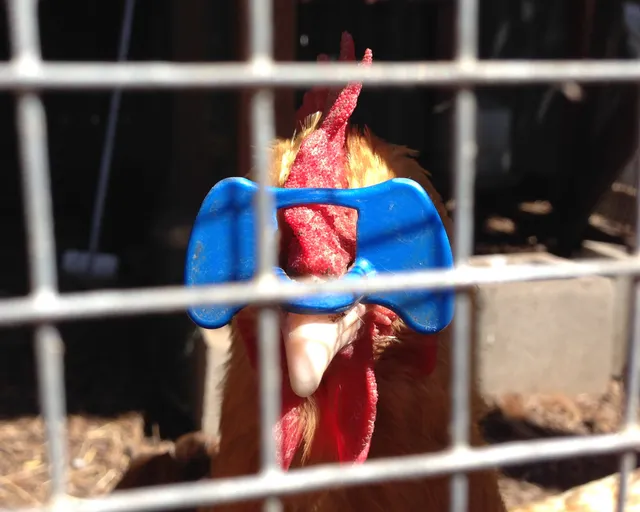
Peepers, also called blinders, are small devices fitted to a chicken’s beak. They block her forward vision to control feather pecking, cannibalism and sometimes egg eating. They’re used mostly on game birds like pheasants and quail, but also on turkeys and laying hens.
There are two kinds. Pinned peepers are held in place by a pin that goes right through the nasal septum, the wall between the two nostrils. They’re illegal in the UK on welfare grounds.
Pinless peepers sound gentler. They’re designed to attach without piercing the septum. Instead, they have two plastic prongs that fit inside the nostrils and grip to hold the peeper in place. So something is still pushed into her nostrils, and it stays there, day and night.
It helps to know where peepers come from. They’re a tool from game bird farms, where hundreds of pheasants live together in one pen to lay eggs for chicks that will be raised for hunting. On those farms, peepers are routine. The biggest game bird farm in the US puts them on all its breeding birds. Changing how the birds live just isn’t on the table there.
In your backyard, it is. And that’s your biggest advantage.
How are they supposed to work?
Chickens see the world very differently from us. Their eyes are on the sides of their head, giving them a field of vision of about 300 degrees, compared to our 180.
They only have a small area right in front of the beak where both eyes see together. They use that binocular vision when they need depth perception, like pecking at food. (If you want to know more, read The fabulous vision of chickens.)
Peepers block that area. That makes it harder for a chicken to aim a peck at another bird. But it also blocks her view of everything else straight ahead of her.
Why I find them cruel
A piece of plastic is clipped into her nostrils, and it stays there day and night, for weeks or months. She can’t see what’s straight in front of her beak, so she has to turn her head to look at her own world.
And she has to live like this because of a problem she didn’t create.
Sellers say peepers are painless. One big hatchery states they don’t cause any discomfort to the birds. The research tells a different story.
A study on game farms in England compared pheasants in breeding pens with and without spectacles, a type of pinless peeper. In hens, the spectacles cut feather damage in half. But they also increased head shaking and scratching, and bill and nostril damage was over four times higher.
The hens with spectacles also foraged and perched less. The researchers think that blocking their forward vision made it harder for them to peck at individual bits of food.
So yes, peepers can reduce pecking damage. But they come with a cost for the bird wearing them. They change how she lives, not just how she pecks.
What they did to one hen
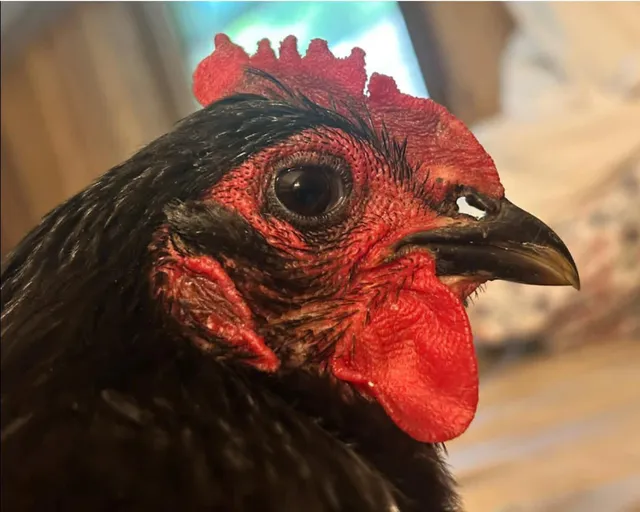
Broken Heart Haven sanctuary shared this hen’s story and photo with us.
She arrived at their sanctuary wearing pinless peepers. When they were removed, the damage was clear. The peepers had permanently stretched her nostril. See the white spot in the photo? It’s a hole. You can see the comforter behind her through it.
Three years later, the hole has shrunk, but it’s still there. The sanctuary believes the damage compromised her breathing. She gets little colds easily.
Her sister also arrived wearing peepers. Like the other hens rescued with them, she was very sick. The skin on her face had grown over the peepers. She died that night. If she had lived, the sanctuary says a vet would have had to remove them.
Sure, some people use peepers without any problem. But is it worth the risk?
Even our vet suggested them
A few years ago, we were having a hard time with Addie and Sophie, two turkey girls rescued from a meat farm. After living together peacefully for a while, they started fighting badly. Pinching, cuts, bruises, blood. We had to separate them completely, and every attempt to reintroduce them failed.
Someone suggested a hormone implant to calm Addie down, so I asked our avian vet. For Addie, he advised against it. Hormones may amplify aggression, he explained, but they don’t cause it, and an implant doesn’t teach a bird any new behavior.
Instead, he suggested pinless peepers. Without her stereoscopic vision, a bird can’t easily focus a peck on another. Once the fighting calms down, the birds can live together again and hopefully build a peaceful relationship.
To be fair to him, he didn’t see peepers as the whole answer. He saw them as a short-term tool while we worked on improving how the birds could interact.
It made sense on paper. But I never used them. It just didn’t feel right to put something in Addie’s nostrils and block her vision, when the problem was between the two of them.
So we did something simpler. We split their yard in two, with no shared fence, and did the same in their barn. It took a few tries. Addie bulldozed through her temporary pen once to go pick a fight, and Sophie turned out to be a real Houdini. But once the pens were reinforced, the fights stopped. (You can read that chapter in Turkey fights.)
Addie and Sophie never became friends again. They lived side by side, each in her own space, until Addie passed.
And that’s okay. Not every pair of birds has to get along. Sometimes the kindest answer isn’t changing the bird. It’s changing the space around her.
The real problem
I took the photo of the blue peepers at a coop in a local community garden. The chickens weren’t bullies by nature. The coop was too small, there were too many chickens, and they were bored.
That’s often the story. Bullying has a cause. A peeper puts the burden on one bird, while the problem stays in the coop.
Some squabbling is normal. Chickens have a pecking order, and a quick peck to say “that’s my spot” is part of flock life. Real bullying is different: one hen chased away from food, pecked until she bleeds, or never allowed to rest.
Common causes include:
- Not enough space
- Boredom and nothing to forage
- A diet that’s missing something, like protein
- Too few feeders and waterers
- New chickens joining the flock too quickly
- A sick, injured, or disabled hen being picked on, like our blind Peppa (read Peppa’s coop)
What to do instead
Protect the victim first. If a hen is hurt, get her somewhere safe right away so she can heal. Some chickens do best with a personalized setup.
Watch. Who is pecking whom? When? Around the feeder, the nest box, the roost?
Check everyone’s health. A hen who suddenly becomes a target, or a bully, may not feel well. Your vet can help.
Give them more space. More room, more hiding spots, more perches. Add feeders and waterers in different places so nobody can guard them all.
Keep them busy. Bored chickens find trouble. Give them things to scratch, forage and explore. See Happy chickens for enrichment ideas.
Separate when needed. A second coop lets you keep birds apart while you work on the cause. Reintroduce them slowly and watch what happens. See Introducing new chickens.
Split the space. Like we did for Addie and Sophie, some birds just need their own yards.
In short
When a chicken bullies, she’s telling us something isn’t right. Peepers can quiet the pecking, but they don’t fix what’s wrong.
Unlike a game bird farm, you can fix it. Look at what your birds need: more space, more to do, medical care, or a safer arrangement. It takes a bit more effort than clipping on a peeper, but your whole flock will be happier for it.
And sometimes living peacefully means living apart.